| Highlights from yesterday |
|
Comments |
- US Central Command states it has redirected 99 commercial vessels to enforce a blockade in the Strait of Hormuz, as Iranian, Iraqi and Gulf delegations prepare to meet in Oman to negotiate maritime security.
- Iran says a meeting is scheduled to be held in Oman on Monday to discuss safe commercial shipping routes in the Strait of Hormuz with Iraq and Gulf states.
|
|
|
| |
|
|
| |
|
|
Iran wants to portray a collective regional approach to opening the Strait of Hormuz
Iranian officials are expected to meet with representatives of Gulf states in Oman on Monday to discuss next steps on opening the Strait of Hormuz.
Comments from Iran’s Foreign Ministry spokesperson Esmaeil Baghaei reveal an attempt by Tehran to give this meeting a wider political context: that Iran wants to portray a solution to opening the waterway as a collective approach, meaning regional issues should be solved by regional actors, especially concerning the future management of the Strait of Hormuz.
Iran and Oman have already announced that they have an understanding on establishing a temporary shipping route through the strait, as well as demining the waterway in the short term and determining next steps on how to manage traffic through the strait.
There also seems to be an understanding that GCC countries that are littoral or adjacent to the strait will be involved, so that a solution serving all parties will be on the table.
|
|
|
| |
|
|
Iran used Chinese satellite images for July attack on US base in Jordan: WSJ
The Wall Street Journal reports, citing US officials familiar with details of the incident, that Iran used Chinese satellite images to carry out its attack that killed three US soldiers in July.
According to the report, Tehran had acquired high-resolution satellite images of the Muwaffaq Salti airbase, a US military base in Jordan that was fatally struck.
US officials declined to identify the Chinese entities that supplied the imagery to Iran and did not allege direct involvement by Beijing, WSJ reported, adding that senior US officials raised the allegations with their Chinese counterparts, who pushed back and demanded proof.
In May, Washington sanctioned three Chinese companies over the alleged provision of such imagery to Iran.
|
|
|
| |
|
|
‘Blew the hell out of it’: How Iran damaged US bases in Bahrain, Jordan
A Bahrain-based United States military installation has sustained severe damage during recent months of fighting with Iran, the acting secretary of the US Navy has said, prompting Washington to evaluate what to do with its headquarters in the Middle East.
“They blew the hell out of Bahrain,” Hung Cao said in an interview with The Epoch Times on Wednesday, in a rare official admission of the impact of the conflict on a key US facility amid escalating tensions in the Gulf, six months into the US and Israel’s war on Iran.
Iranian Foreign Minister Abbas Araghchi responded to Cao’s acknowledgement of the damage inflicted on the US facility. “We appreciate the candor of Acting Navy Secretary Hung Cao,” the official wrote on X.
|
|
|
US official blames record diesel prices on Middle East and Russia refinery disruptions
Kevin Hassett, director of the White House National Economic Council, says record diesel prices are being driven by disruptions to refined fuel production in the Middle East and Russia.
“The high diesel prices are already part of the story, and it’s really a result of disruptions for refined product in the Middle East and in Russia,” Hassett said.
He said the price surge was a serious concern for truckers and farmers, adding that the US administration was considering “every possible measure” to provide relief.
Asked what impact an end to the war in Ukraine would have, Hassett said: “Then everything would return to normal.”
|
|
The United States gets about 60% of its crude oil from domestic production within its own borders and imports the remaining 40% primarily from Canada, Mexico, and Saudi Arabia.
According to the US Energy Information Agency, the United States produces nearly all of its diesel fuel domestically at local petroleum refineries, importing only a small fraction from other nations.
So, how can Hassett claim that disruptions in Russia and the Middle East are to blame?
|
Clashes reported between Iranian security forces, armed group in Saravan
Clashes have been reported between Iranian security forces and an armed group in Saravan, in Sistan-Baluchestan province, according to Iran’s Tasnim news agency.
According to the report, the fighting began when those it described as “Islamic fighters” attacked a house allegedly being used by “mercenary terrorists”.
|
|
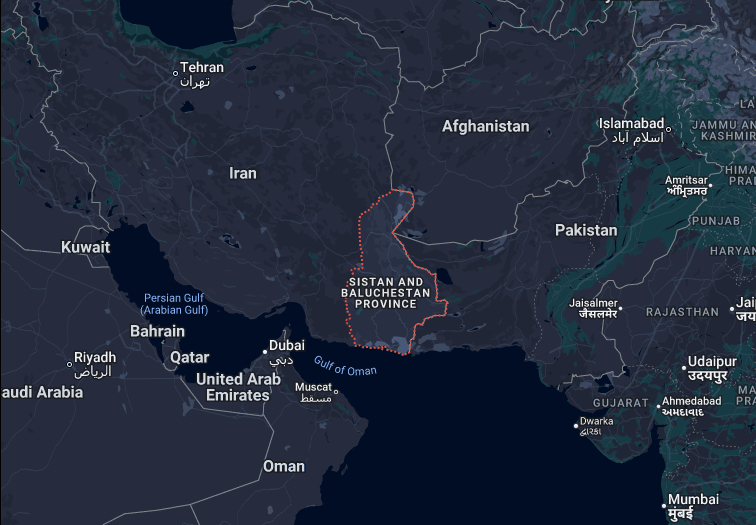
Sistan-Baluchestan province borders with Pakistan's Baluchestan where separatists are fighting for an independent state. Clashes on the Iranian side have reemerged during the first two months of the Israeli-American war on Iran.
|
Iranian forces kill 4 ‘mercenary terrorists’ in Saravan clash
Iran’s Revolutionary Guard says security forces have killed four people accused of planning a terrorist operation in Sistan-Baluchestan province.
In a statement published by Tasnim news agency, the IRGC said it targeted a “professional terrorist team” that was allegedly organizing an attack in Saravan. Three Iranian soldiers were also killed.
We earlier reported that fighting began in Saravan after an attack on a house allegedly being used by “mercenary terrorists”.
The IRGC did not provide more details on how the clash unfolded, but claimed the US and Israel have sown “insecurity” in Sistan-Baluchestan.
|
|
|
| |
|
|
| |
|
|
China to raise gasoline, diesel prices due to escalating regional tensions
China is increasing the retail prices of gasoline and diesel from Saturday due to recent changes in international crude oil prices, according to the country’s official Xinhua news agency.
The price increase was announced by the National Development and Reform Commission (NDRC), the country’s top economic planner, on Friday.
Under the adjustment, gasoline and diesel prices will increase by 260 yuan (about $38.76) and 250 yuan ($37.27) per tonne, respectively.
After the increase, diesel consumers will be paying 7.96 yuan or $1.19 per litre (0.26 gallons), whereas gasoline consumers will pay between 8.25 yuan and 8.68 yuan or between $1.23 and $1.29 per litre.
The NDRC said the increase is due to escalating tensions between the US and Iran since China’s previous adjustment of refined oil prices on August 28, according to Xinhua.
|
|
|
| |
|
|
US limits air defence time slots for tankers sailing through Hormuz: Report
The US has asked tankers travelling through the Strait of Hormuz to sail only at specific times to guarantee military protection after Iran stepped up attacks on ships travelling at night, according to a report by The Financial Times.
Washington has been offering air-based defence since May to ships wanting to sail via a route hugging the Omani coast on the strait’s southern side.
That period during which ships would be protected was cut down to two specific time slots daily around the start of September, the FT reported, citing emails sent by the US naval coordination centre to maritime advisers.
|
|
|
| |
|
|
Senior Iranian official dismisses talks with US without full compliance
The head of the Iranian parliament’s national security committee warns that talks with the US are useless unless Washington accepts all of Tehran’s demands.
In a post on X, Ebrahim Azizi wrote, “As long as the American side does not accept all of Iran’s conditions, dialogue and negotiation are of no use.”
In a separate post on X, Ebrahim Azizi added, “No negotiations. Until Iran’s terms are met, talks are futile.”
|
|
|
| |
|
|
BRICS Summit India
|
|
|
| |
|
|
BRICS meets in India amid US-Israel war on Iran
More than a dozen world leaders are attending the 18th annual BRICS summit in New Delhi, which comes just more than six months since the US and Israel’s war on Iran began.
In May, a BRICS foreign ministers’ meeting failed to jointly condemn the war on Iran.
Iran’s President Masoud Pezeshkian, who will be at the summit, is expected to discuss the war.
But the confrontation between BRICS members Iran and the UAE, and ongoing clashes between Saudi Arabia and the Iran-aligned Houthis in Yemen in the context of the war, will make reaching common language on the conflict difficult for member nations.
|
|
|
BRICS reportedly agrees on joint declaration before India meeting
The BRICS group of emerging economies has agreed on a joint declaration, unnamed sources told the Reuters news agency, hours before its leaders began a summit in New Delhi.
The meeting aims to bridge divisions between members Iran and the United Arab Emirates over the US war. Foreign policy experts say the key test for the bloc will be finding language on the Middle East crisis that both Abu Dhabi and Tehran can accept.
Such a joint statement is unlikely to influence the current geopolitical landscape, but would demonstrate unity among emerging nations against economically debilitating policies such as Western sanctions, they said.
The BRICS foreign ministers, meeting in New Delhi in May, were unable to issue a joint statement, stymied by differences between Iran and the UAE. The Emirates, after being hit by Iranian missiles, suspended all trade and financial transactions with Iran in August.
|
|
|
No need for US ‘policeman’ in the Middle East, Iran president says
Iran’s President Masoud Pezeshkian says the United States isn’t required as a “regional policeman” with the two countries at war and vying for control of the Strait of Hormuz.
“We do not need a regional policeman: the territorial integrity and security of the region can only be guaranteed by its main players and the countries that comprise it,” he said on the sidelines of the BRICS summit in India, during a meeting with Malaysian Prime Minister Anwar Ibrahim.
The summit comes during the broader global economic effects of the US-Iran conflict, which has fuelled an energy crisis and raised concerns about energy security, trade and inflation.
|
|
|
China’s Xi says Iran war has caused ‘serious losses’ to people in the region
According to Chinese state media, President Xi Jinping urged BRICS countries to play a pioneering role in maintaining peace and stability amid the ongoing war in on Iran.
“The situation in the Middle East and the Gulf region continues to evolve, the war there has caused serious losses to people across the region and does not serve the common interests of the international community,” Xi said during the summit, state-run Xinhua News Agency reported.
He added that the war does not serve the common interests of the international community.
|
|
|
Iran’s President Pezeshkian holds talks with UAE leader MBZ at BRICS summit
Iranian President Masoud Pezeshkian has held a meeting with his UAE counterpart Sheikh Mohamed bin Zayed Al Nahyan, on the sidelines of the BRICS Summi, the Iranian embassy in India said.
|
|
|
China offers role in peace negotiations between US and Iran
Beijing has offered to mediate between the warring factions to help bring about peace in the tumultuous Middle East.
“China is willing to work with fellow BRICS members to play a role in achieving peace and stability in the Middle East and the Gulf region,” President Xi Jinping told the official Xinhua news agency in New Delhi.
“The war has caused serious losses to people across the region and does not serve the common interests of the international community,” he said on the sidelines of the BRICS summit.
|
|
|
BRICS leaders call for conflict prevention and say Gaza ceasefire should be upheld
The BRICS group of emerging economies has agreed on a joint declaration, India’s Prime Minister Narendra Modi has announced.
Here is what the declaration said:
- Leaders stressed the need for conflict prevention, noting that the root cause of conflicts should be addressed.
- The BRICS nations reiterated their commitment to peaceful resolution of international disputes through dialogue, consultation and diplomacy.
- The group expressed concern over the growing risks of nuclear danger and conflict, stressing that nuclear safeguards, safety and security must always be upheld, including during armed conflicts.
- The leaders also criticised the rise of unilateral tariff and non-tariff measures, which they said distort trade and are inconsistent with World Trade Organization rules.
- On Gaza and Palestine, BRICS said the “ceasefire” in Gaza should be maintained and backed a two-state solution.
- On Lebanon, BRICS leaders welcomed the “ceasefire” and called for the implementation of UN Security Council Resolution 1701, which ensures the cessation of hostilities between Israel and Hezbollah.
|
|
|
Egyptian President el-Sisi calls for stable, free navigation amid Middle East tensions
Egyptian President Abdel Fattah el-Sisi has called for maintaining stability and freedom of international navigation during escalating regional turmoil.
“The current developments in the Middle East and their negative repercussions on the global economy, trade and energy flows, and supply chains affirm the close link between security and development,” el-Sisi said in a speech at the BRICS summit in New Delhi.
“Given its strategic location and pivotal role in global trade, Egypt recognizes the importance of maintaining the stability and freedom of international navigation,” a presidency statement quoted him as saying.
The remarks mark el-Sisi’s second public call in 24 hours for stability along international shipping routes. During a meeting with Russian President Vladimir Putin on the summit’s sidelines Friday, he stressed “the importance of achieving stability amid the circumstances and crises facing the region”.
Navigation through the Strait of Hormuz remains disrupted by the fallout of the US-Iran war. The Iran-aligned Houthi group has also advanced towards the Bab al-Mandeb Strait, raising concerns over broader consequences for Red Sea navigation and Egypt’s Suez Canal.
|
|
|
Iran’s Pezeshkian and Indian President Murmu discuss longstanding ties
Iranian President Masoud Pezeshkian has met with his Indian counterpart in New Delhi where he called for the two countries to utilize their potential to expand economic relations.
Pezeshkian told Droupadi Murmu that Iran “witnessed the criminal actions of America and Israel” in recent months, but said the Iranian people “resisted with all their might and stood up to their bullying”.
Iran was not “the aggressors but rather we stood against the enemy’s aggression”, he added.
Murmu reiterated India’s commitment to the pursuit of “enduring peace through dialogue and diplomacy” during the discussion, a statement on the president’s Instagram account said.
The two leaders also spoke about “the long-standing bonds of friendship between Iran and India, including our strong cultural and people-to-people ties”.
|
|
|
South Africa’s president says international law can’t be selectively applied
South African President Cyril Ramaphosa has called for accountability for “atrocities, for the ongoing genocide against the people of Palestine, for the crimes committed against the people of the Sudan, and for the illegal war against Iran.”
Speaking at the BRICS summit, he said it was important to “exert pressure and expose violations whenever and by whomever they are committed”.
“International law cannot be applied selectively,” he added. “The same principles must apply to all states and the same protections must apply to all peoples.”
Ramaphosa also noted that “overt violations of the UN Charter and the resort to war to settle differences between states” are threatening the UN’s relevance and the durability of the multilateral system.
|
|
|
Iran, UAE hold first talks at BRICS summit since conflict began
Iran’s President Masoud Pezeshkian has met Abu Dhabi’s Crown Prince Khaled bin Mohamed Al Nahyan at the BRICS summit for their highest-level talks since the conflict began. Both backed calls for restraint, despite Iranian attacks on the UAE. Bahrain refused to meet Pezeshkian.
|
|
|
| |
|
|
end of BRICS Summit India
|
|
|
| |
|
|
| |
|
|
| |
|
|
Iran president confirms Hormuz meeting with Arab states
Iranian and Gulf Arab officials will meet in the Omani capital Muscat on Monday to sign an agreement establishing an Iran-Oman shipping route through the Hormuz Strait, Iranian President Masoud Pezeshkian has confirmed.
“This week, on Monday, the foreign ministers of the Arab countries will meet in Muscat to sign an agreement establishing a joint route between Oman and Iran in the Strait of Hormuz and to notify the International Maritime Organization of the agreement,” Pezeshkian said in an interview.
“The countries whose territories were used to launch attacks against us by the US will also attend this meeting.”
Pezeshkian said Iran will reopen the strait when the US ends its blockade and attacks.
“They could not achieve their objectives through war, which is why they turned to economic pressure, but we will not stop. Maritime routes are certainly not something on which our survival depends, and they will not be able to achieve their objectives in this way either.”
|
|
|
Bahrain will not join Arab states’ meeting with Iran on Hormuz
Bahrain “will not be a party to any group meeting that includes Iran before the return of diplomatic relations between the two countries”, its Ministry of Foreign Affairs has said in a statement.
The ministry also cited attacks against Bahrain and today’s targeting of Saudi Arabia’s East-West pipeline, noting dialogue “cannot ignore the facts”.
Any arrangement on the Strait of Hormuz “must safeguard the right of transit passage for all ships without discrimination, fees, or permits”, it added.
Iranian President Masoud Pezeshkian earlier said Iranian and Gulf Arab officials will meet in Muscat, Oman, on Monday to sign an agreement establishing an Iran-Oman shipping route through the crucial waterway.
|
|
|
Trump claims war on Iran will end very soon
President Donald Trump has said that he believed the war with Iran will end after US midterm elections in November and that oil prices will tumble once it does.
“I think very soon. I think it’ll be probably right after the mid-terms. They’re trying to hold out as long as they can to complicate the election. But I think people are wise to it,” Trump told reporters in Dublin.
“When that happens, oil prices will come tumbling down.”
|
|
|
US president says NATO, Europe ‘very disappointing’ on Iran
Trump has again addressed the war on Iran from Dublin, railing against NATO and European countries as “very disappointing in many ways”.
“NATO didn’t want to help us with the Strait [of Hormuz], even though we don’t get any oil from the strait,” Trump said.
The president also claimed that “everyone’s seen the dominance of American military equipment” in Iran.
“We took out every mine. There’s no mines out there,” he said.
|
|
|
Ireland’s president tells Trump ‘normalisation of war and genocide’ cannot be accepted
Ireland’s President Catherine Connolly has highlighted to Donald Trump the Irish people’s “strong commitment” to international relations, the United Nations and their pride in “Ireland’s contribution to UN peacekeeping since 1958”.
In a statement released after her meeting with the US president in Dublin today, Connolly said she “conveyed the strong view of the Irish people that the normalization of war and genocide can never be accepted”.
“As a country which has suffered famine, colonisation and the violence of the Troubles, but also the importance of the long and challenging road to peace, I emphasized the unique insight which Irish people can bring to the resolution of conflict,” she said.
She told Trump that Ireland would “strongly support all those who have the strength to build a shared peace in all those parts of the world currently suffering from such horrific war and violence”.
|
|
|
CENTCOM says 100 vessels redirected as part of ‘steel wall blockade against Iran’
The United States Central Command (CENTCOM) says its forces have redirected 100 commercial vessels in the past 60 days as part of its blockade on Iranian ports.
CENTCOM said no ships have passed through its “steel wall blockade against Iran” without US permission.
“American service members remain laser focused on this mission”.
|
|
No data is available showing the names of the 100 vessels, their IMO registration, position where they were "redirected," and date and time.
|
Iran’s Baghaei says US ‘military aggression’ is continuing
Iran’s Foreign Ministry spokesperson says US “military aggression” against his country is continuing, arguing that Washington’s economic measures and “so-called blockade” are part of that aggression.
Speaking to Al Jazeera, Ismail Baghaei rejected describing the situation as a “confrontation”.
“We have been defending ourselves. We have been defending Iran against military aggression by the United States, which, by the way, continues until now,” he said.
Baghaei said Iran was entitled to defend itself under Article 51 of the UN Charter. “As long as their military aggression continues, we have no choice other than defending our territorial integrity and national sovereignty,” he said, adding that Tehran remained willing to use “every possible means, including diplomacy” to protect its national security and interests.
|
|
|
Iran and Oman to brief Gulf states on Hormuz consultations: Baghaei
Iran and Oman will brief regional countries on their consultations over the safe passage of ships through the Strait of Hormuz at a meeting expected to be held on Monday, Iran’s foreign ministry spokesman said.
Ismail Baghaei said foreign ministers from Gulf states, as well as Iran and Iraq, would “hopefully” be attending.
“As part of the agenda, we are going to brief the delegations about the results of the Iran and Oman consultations regarding the safe passage of ships through the Strait of Hormuz.”
Baghaei added that Iran and Oman had conducted the consultations as “the two coastal states of the Strait of Hormuz” and would share the results with other countries in the region.
He said Tehran believed regional security should be guaranteed by regional countries “without intervention by the foreigners, by the outside powers”.
“We believe, as neighbors, we have to talk together, we have to build confidence, in order to build a regional security that is based on the will and the common interest of all the countries of the region.”
|
|
|
Iran accuses US of ‘politicizing’ IAEA over nuclear program
Iran has accused the United States of “politicizing” the IAEA over Tehran’s nuclear program, insisting there is no evidence that it has deviated from peaceful purposes.
Speaking to Al Jazeera, Iranian Foreign Ministry spokesman Esmaeil Baghaei said there was “no non-compliance by Iran”.
“They have not found a single piece of evidence that Iran’s nuclear program is deviating from peaceful purposes,” he said. “So this is a political decision imposed on the Board of Governors by the … United States,” Baghaei said.
“I think it will not add to the credibility of the Board of Governors, IAEA or the director general himself,” he added.
|
|
|
Iran, Oman foreign ministers discuss ‘issues of mutual concern’
Iranian Foreign Minister Abbas Araghchi and his Omani counterpart, Badr Albusaidi, have held a phone call to discuss the latest developments in the region.
The two top diplomats discussed “the latest regional developments and issues of mutual concern”, according to a statement shared on Araghchi’s Telegram channel.
No further details about the discussions were provided. The call comes as Oman prepares to host Iran and Gulf states on Monday for talks on the Strait of Hormuz, following weeks of negotiations between Tehran and Muscat over restoring safe navigation through the strategic waterway.
|
|
|
Qatar and Jordan discuss efforts to de-escalate tensions and promote security
Diplomatic efforts to de-escalate tensions and promote security and stability” have been discussed by Qatar’s prime minister and Jordan’s deputy prime minister who is also foreign minister, Ayman Safadi.
Sheikh Mohammed bin Abdulrahman bin Jassim Al Thani affirmed Qatar’s support for all endeavors aimed at “reaching a solution that ensures freedom of maritime navigation and paves the way for a comprehensive agreement that achieves sustainable peace in the region”.
They also spoke about ways to support and enhance bilateral cooperation.
|
|
|
Iranian President Pezeshkian says Iran will not surrender to US pressure
Iranian President Masoud Pezeshkian says Iran will not surrender to US pressure, accusing Washington of targeting civilian infrastructure and essential supplies.
In a post on X, Pezeshkian wrote: “If Americans are warriors, let them face our valiant military forces. Why wage war on civilian infrastructure, food supplies, and livelihoods?”
He also accused the US of denying people access to water, food and medicine.
”Our people can’t be bullied into submission. Iran won’t surrender,” he wrote.
|
|
|
Iranian military chiefs warn US, Israel of swift, strong response to ‘any aggression’
Iranian army chief Major-General Amir Hatami said the United States and Israel know that any act of aggression against Iran will be met with a unified, quick and strong response from both the country’s military and the Islamic Revolutionary Guard Corps (IRGC).
“The unity between the two forces has served as an iron shield protecting the country against enemy plots and conspiracies,” he said at a meeting with IRGC Commander-in-Chief Major-General Ahmad Vahidi on Saturday, according to the Fars news agency.
Vahidi said enemy powers have underestimated Iran’s military capacity and realised their mistake.
He said that the Iranian army and the IRGC were the two major anti-American forces that have dealt heavy blows to “terrorist groups” in recent wars, adding that Iran’s true military strength is being shown on the battlefield.
|
|
|
Iran, Turkiye foreign ministers discuss Hormuz, regional conflicts
Iranian Foreign Minister Abbas Araghchi discussed ongoing regional conflicts and diplomatic efforts during a phone call with his Turkish counterpart Hakan Fidan, state media from both countries reported on Saturday.
During the conversation, the two ministers reviewed the situation in the Strait of Hormuz and recent attacks on Saudi Arabia.
Both sides stressed the need to avoid widening the crisis, prevent further escalation and maintain continuous diplomatic consultations to bring stability to the region.
Araghchi also held separate phone discussions with Iraqi Foreign Minister Fuad Hussein and Omani Foreign Minister Badr Albusaidi to address the broader regional situation and coordinate diplomatic efforts.
|
|
|
